Showing posts with label spain. Show all posts

Tuesday, September 4, 2012

La Morisma... Ainsa... The Reconquest... Street Theatre


The reconquest is dated at 724. According to the legend of San Juan de la Peña, García Jiménez was appointed as the first king of Sobrarbe, and he decided to attack the Muslims in L'Ainsa. García and his 300 warriors took by surprise La Aínsa, taking advantage of the night and telling his warriors that the Divine Providence was on their side, since he had seen a cross on a holy oak. Finally, Ainsa was declared capital of the Kingdom of Sobrarbe, and its coat of arms shows a red cross on a holy oak, later being this symbol also included in the coat of arms of Aragón.


This was the icing on the cake so to speak, after my fabulous birthday treat on Saturday, we watched this street theatre from our balcony on the Sunday afternoon.  This is to commemorate the Reconquest of Ainsa, a street play with the theme of Moors & Christians was staged and called "La Morisma" (the moorish). 

Thursday, February 2, 2012

****Black Gold****

 What do Easington (England), Merthyr Tydfil (Wales), La Houve(France), La Camocha (Asturias) and Sant Corneli de Cercs (Catalonia) have in common?

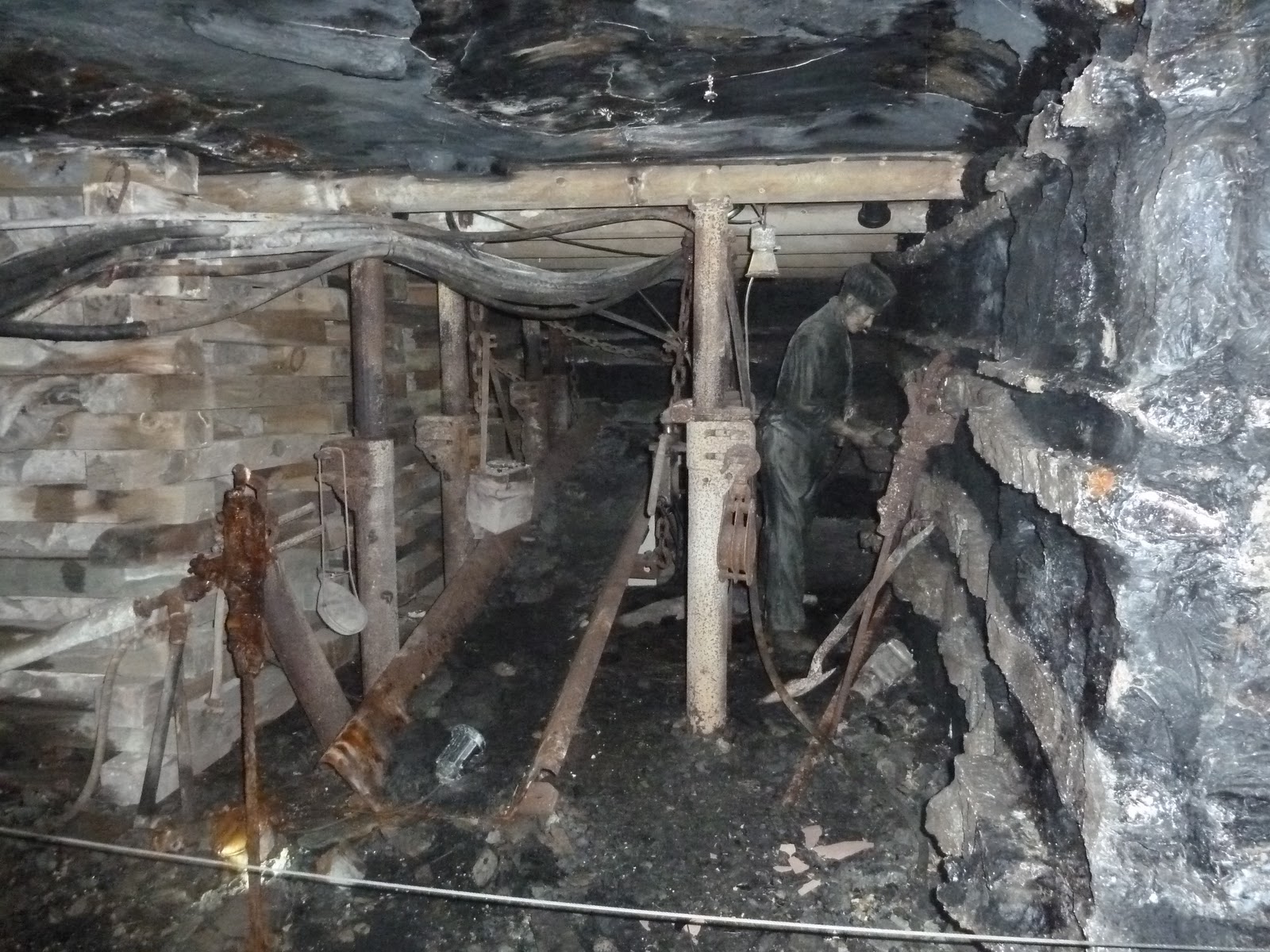
Stumped? Well, the answer is coal mining and I recently had the opportunity to stay in the tiny village of Sant Corneli perched high in the Spanish Pyrenean foothills.  I have always had an enormous respect for the miners who sacrificed their health, and often their lives, to extract the black gold which fuelled the Industrial Revolution and am fascinated by the close knit communities that evolved around this most dangerous of occupations. To me, these communities epitomised the solidarity of working men and women and showed how mutual support and collaboration enabled these heroes of the industrial age to prevail under the most arduous conditions. 

To give you some perspective, San Corneli was part of a collection of local mining villages that, in total, had an astounding 700Kms of mine galleries – enough to stretch all the way across northern Spain as far as Burgos in the west. Of course there are no working mines left now – and perhaps this is no bad thing – but their legacy lives on and there is no better place to revisit the past than the Mining Exhibition in Sant Corneli village where the history of mining in these inaccessible mountains is charted in a way that gives a detailed insight into the lives of the miners and their families as they toiled and sweated in the dark and the dust as well as struggled for fairer employment conditions.
A visit to the exhibition is an absolute must if you are in the area and the “piece de resistance” at the end of your visit is a trip by mine-car into a 400 metre long gallery and, as you make your way back out on foot and view the various tableaux, you feel that you have travelled back in time.
Although a tiny village, San Corneli is situated in an area of outstanding natural beauty and, despite its size, also boasts an excellent little hotel (Santa Barbara) and restaurant so an overnight stop or short break will allow you to appreciate the hospitality of the village, eat wonderful traditional Catalan food, visit the past and explore the area.
 Links:


www.mnactec.cat/museum/museu_de_les_mines_de_cercs_es.htm


www.booking.com/hotel/es/santa-barbara.en.html


www.restaurantsantabarbara.com/


Monday, January 9, 2012

La Sagrada Família, Barcelona


The first thing you see are multicoloured towers piercing the blue sky (yes the sun was shining in November and the sky was indeed blue). You have to try and ignore the huge cranes surrounding the church. La Sagrada Familia is probably the most iconic structure in Barcelona, certainly in mind it is. The church, which is located in L'Eixample, has been a fixture in Barcelona since construction started in 1882 and continues to just grow and grow.

The church already is an incredible intricate structure. For 43 years Antoni Gaudí worked on this project and, since his death in 1926, the task to finish it has been passed on to several architects. All the architects have  respected Gaudí's vision and have made additions with his design in mind.


Impressive stained glass windows line the main room and a lift takes visitors up one of the towers to enjoy the view.(This was sadly closed when we went) Smaller rooms hold exhibits detailing the history and future of the structure. La Sagrada Familia is projected to be completed in 2026, the 100th anniversary of Gaudí's death. In the meantime, it's an incredible experience in itself to watch as this monumental, one-of-a-kind structure is constructed.

You can see work in progress in the work room but my luck was not in as it was a Saturday and they don't work weekends. But I saw the models they are constructing,and well that on it's own was amazing. I also think that the skilled craftsmen working on this project seem to get little mention, although there was a small plaque with some of the workers so I am probably wrong on that point. Gaudi in my mind designed a masterpiece but without the many skills needed to create this work it would have remained on paper.


Sadly on June 7th 1926 he was struck by a tram and as he was taken to be a beggar and had no identification papers on him, he received very little care and died 2 days later. So much for equality and if you’re in shabby clothes you’re nobody. Not much has changed then! A must see if you ever find yourself in Barcelona and watch those trams!

Sunday, June 5, 2011

3 Wise Men a Bug and a Bottle of Fockink Gin!


My Son in Law found this the other day when cutting wood,we just can't work out what it is,  more to the point how it just happened to leave it's entire body behind. See for yourself, it has a split down the back centre line but how did it manage to leave the shell intact?  I think this will remain a mystery unless someone can explain this to me. Meanwhile stopping off at a vide grenier (car boot sale)on the way home today I came across the three wise men and, you would have thought they would  have known what it was but I think they had been to the same bar in Spain where I discovered this bottle of Fockink Gin!!! I am no further forward.


Monday, February 7, 2011

Catching a Little Sun in Ainsa


Just under 4 hours drive from here in the Tarn took us to glorious sunshine and a fabulous  romanesque village in Spain called Ainsa, walk up to the  ancient Plaza Mayor where the medival streets will engulf you straight into that historic period of the 16th Century.

A superb restaurant in the square called Callizo and we were really looking forward to eating there again, we had called to reserve a table but had not understood the recorded message telling us it was closed till March :( oh well another great excuse to go back again and perhaps learn some Spainsh!


By sheer chance the following day happened to be the 1st Sunday in Feb and  a fiesta was in preparation,  a full day ahead lay in store from watching all the cattle, goats, dogs,chickens to name a few  being  paraded and judged very seriously as to which was the best of breeds.


Lots of wonderful cakes, cheese, hams and oh the breads, the aromas were abundant and  I  found myself constantly hungry. 
Gorgeous little elf shoes for sale and if you happened to be a biker looking for a break then this looked like a good place to THAKE it.


Truffles galore and at prices that were sending some people into some sort of heaven. I saw them priced from €22 to €83. I have never eaten truffles so no idea what is so exciting about them, do tell !!!


Fires were lit and mountains of sausages were being grilled, the wine started to flow and in my case all down my neck, the Spanish make this drinking from the long necked jugs easy ha well practice makes perfect! All I can say is that I am glad this picture of me attempting to drink is blurry.

Did manage to go for a few good walks just so you know it's not all about drinking! Salud

Monday, September 13, 2010

A Touch Of Spain - Hola

Well despite the intention of staying in Tarrogona for the first night of our holiday we ended up in a small city called Sitges 35 klms Southwest of Barcelona and if you knew how bad I am at map reading you would understand how that came about:! Sitges is  very pretty and within a few minutes of arrival you soon realised that it is shall we say a gay-friendly sort of place:) Saw some amazing sand sculptures though, but my camera was not even unpacked and anyway it was dark. Thanks to good old google I found this great shot of an Indian and Jazz player curtesy of Travelogged.com. The ones we saw were, crocodiles, Hommer, Snow White, castles and were just amazing pieces of art.

The following day we headed of this time for L'Ametlla de Mer where we had rented a mobile home, settled in and ready for some exploring. Beautiful coastal paths with  mad looking plants and hidden coves where you could swim and had the place all to yourselves ah bliss.


We found a leaflet which was inviting us to explore the "Coves Meravelles" so we had a drive over to Benifallet to discover they were not so marvellous as they were closed and we were really dissapointed , seemingly they date back to the neolithc period. Well had the caves been open we probably would have missed this wonderful place called Tortosa. But if any one has any pictures of the caves I would love to see them.

Tortosa's castle (La Suda) which looks down on the town from its lofty position, dates from the 10th century but incorporates part of a much earlier Roman acropolis. The castle has now been restored and turned into a  'parador' with the most stunning views of the town and the River Ebro.


Tortosa suffered badly during the Spanish Civil War (1936-39), when the River Ebro formed the front line between the opposing forces, the town eventually fell to the Nationalist forces in April 1938 after a bloody battle which cost some 35,000 lives.
Tortosa cathedral which dates from 1347 was built on the site of a Moorish mosque built in AD 914, it is mostly of Gothic design but had a Baroque façade added in the 18th century, the stalls in the choir were carved between 1588 and 1593 by Cristobal de Salamanca.

So I was really pleased to have missed the marvelous caves.
The next few days were filled with going to various markets,walking visiting the ports eating and drinking (would be rude not to) really.
Related Posts Plugin for WordPress, Blogger...